Showing posts with label Spiritual Cinema. Show all posts
Showing posts with label Spiritual Cinema. Show all posts
Miracles are Seen in Light (ACIM 111)


"Avatar" and the Co-Evolution of Consciousness, Culture and Society

As we explore the movie Avatar (2009) as our conscious movie-of-the-month, we have the opportunity to use it to more viscerally learn about the different stages of human adult development and how the structures of consciousness of each stage co-evolve with human cultures and societies. We have this opportunity because Avatar masterfully gives us clean and clear examples of each stage and structure through the consciousness of the characters and the cultures and social structures that relate to each stage.

Avatar imagery representing Tribal or Magical consciousness, culture and society
First we have the Tribal or Magical structure of consciousness and stage of development. This is represented by the tribal characters, the cultural worldview represented in them and between them, and the very structures of their society in the film. This stage includes a magical sense of wonder and beauty and a deep connection to nature and to the tribe.

Avatar imagery representing Traditional or Mythic consciousness, culture and society
The next stage of development is the Traditional or Mythic structure of consciousness. This is represented in the human military characters, their cultural worldview, and the social structures and conventions of their world. This stage includes a black or white, right or wrong way of perceiving, being and doing in the world, a tendency toward authoritarianism, and the strict adherence to rules and regulations and a prescribed order.
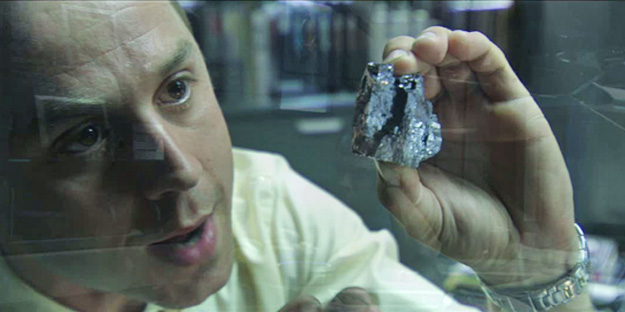
Avatar character representing Modern or Rational consciousness, culture and society

Avatar character representing Postmodern or Pluralistic consciousness, culture and society
The next stage is the Postmodern or Pluralistic stage of development and structure of consciousness, represented most clearly by the Dr. Grace Augustine social scientist character played by Sigourney Weaver, and the cultural and social constructs surrounding her character. This stage includes a deep recognition and valuing of subjective experience along with an over-arching cross-cultural perspective and an empathy for the suffering of others.

Avatar imagery representing Meta-modern or Integral consciousness, culture and society
And finally the Integral stage and structure is hinted at in the final moments of the film when the main character leaves his human body that is dying and goes fully into his avatar body via a transference of his consciousness by and through the world tree. All we see are his eyes opening in that scene, but we get a sense that he has been to "the other side" and has seen the big-picture of the universe. This big-picture awareness is one of the hallmarks of the Integral structure of consciousness, along with the awareness of all the previous stages and their inherent value and limitations, and how the stages and structures evolve. The Integral structure seeks to see and understand as much as possible from as many perspectives as possible and then integrating it all into a big-picture understanding.
Individuals, cultures and societies tend to co-evolve through these stages and structures. Individuals at the leading edge create and innovate from the new emerging stage and structure, and in turn their creations resonate with the stage and structure they were created from, which then stimulates others in the culture and society to evolve to meet the new stage/structure patterning embedded in these creations. In Avatar while we do not see the various cultures and social structures co-evolving with consciousness, the main character evolves through all of them, which gives us a sense of the arc of development at the heart of this whole co-evolutionary process.
Our research suggests that this type of integration of multiple stages and structures in a cinematic work contributes to the potential success of the film, by giving the film a greater capacity to reach a wider population across the stages of development. This hypothesis is based on the results of an meta-analysis of the most successful films of all times revealing an unusually high percentage of these films having this quality.
Integral Goes to the Movies on YouTube

Acclaimed filmmaker and Integral Cinema Project founder Mark Allan Kaplan, Ph.D. presents a mind-blowing new way to look at and think about the moving image in all its evolving forms. This March 16, 2016 talk for Bay Area Integral at the Rudramandir Center in Berkeley, CA has been turbocharged with dozens of visual aids and nearly 100 film clips to create a multi-dimensional visceral experience of the evolution of cinematic consciousness.
Video directed & edited by Jonathan Steigman
With Integral Cinematic Meta-Design by Mark Allan Kaplan
Special thanks to Bay Area Integral and the Bay Area Integral team
"Voice in Exile" DVD Release - Now Available at Amazon.com

The DVD of "Voice in Exile," my dramatic AFI film about a young stutterer, is now available for purchase from Amazon at: http://www.amazon.com/Voice-Exile-Ben-Bottoms/dp/B00BJC8J9C/
About the Film and the Process of Creating it...
Voice in Exile is a dramatic transformative film journey into the mind and emotions of Alan Woodward, a seventeen year old stutterer. Seeing the world, both imagined and real, through Alan's eyes, we share the nightmare that haunts him and his family as he struggles to not let his stuttering stop him from living.
My goal as a filmmaker was to capture the inner and outer world of the stutterer through dramatic, symbolic, archetypal, and audiovisual expression. This was a deeply personal journey for me since I have been a stutterer for most of my life.
The process began with the writing of the script. During the scriptwriting phase I delved into my own experiences and emotions as a stutter and tried to translate them into a dramatic story. I also interviewed other stutterers for additional research. The script was further developed while I worked with my cinematographer and production designer to translate the experiential reality of the stutterer into a visceral audiovisual language.
An audiovisual score was created for the film to explore the use of the expressive elements of space, shape, line, light, color, tone, rhythm, movement, orientation, time, contrast/affinity, sign, symbol and archetype in the capturing of the emotional and perceptual states of an individual who stutters. This score was developed from the my own personal story and experiences, along with the stories and experiences of other stutterer's. The screenplay and storyboards were created concurrently with the visual score, enabling the integration of the visual design throughout the piece. The visual score included divisions for subjective and objective perceptions of waking reality (SPR/OPR); subjective dream states (SDS); and subjective developmental transitions (SDT).
Throughout this process and the rest of preproduction, production, and postproduction, a profound inner battle waged within me. Part of me desired to share these inner experiences with others, while another part of me was terrified of revealing this deeply personal emotional reality.
This personally transformative filmmaking experience also appeared to have a transformative effect on viewers of the film as well. A majority of stutterer's reported feeling as though the film captured their inner lives. This produced emotional release, a reduction in feelings of isolation, and an increase in self-esteem in numerous cases. There was one reported case of the film averting an individual’s attempt at suicide. Families of stutterer's who viewed the material reported an increase in understanding and empathy for the family member who stuttered. Non-stutterer's reported an increase in understanding about stuttering and empathy for people who stutter.
"Voice in Exile" also won numerous awards including the Golden Gate Award at the San Francisco International Film Festival and the Silver Medal at the Chicago International Film Festival, and was aired on Cinemax/HBO and A&E Cable Networks.
More Information About "Voice in Exile" is available at voiceinexile.com.
Seeing the Light

"For the moment, look at cinema as a mystery religion. One enters the darkened place and joins the silent congregation. Then comes the beam of light out of the shadows: the Projector, the Great Projector up there behind us! Turn out the little lights so that the big light can penetrate the darkness! Ah, behold the unreeling of the real reality of practically everything: our dreams, our idiocies and raptures, our nativity, passion and death."
- James Broughton (Seeing the Light, 1986)
Transpersonal Dimensions of the Cinema

Announcing the publication of…
Transpersonal Dimensions of the Cinema
By Mark Allan Kaplan, Ph.D.
ABSTRACT: Transpersonal dimensions of the cinematic art form are explored, including transpersonal elements inherent in the nature of the cinematic medium; transpersonal influences on cinematic content, structure, and style; and potential transpersonal effects of the cinematic experience. A preliminary classification of transpersonal cinematic effects indicates potential synchronization effects between constructed cinematic reality and various aspects of creator/viewer realities. Personal filmmaker observations and a review of theoretical, empirical, anecdotal, and historical sources suggests that the transpersonal or boundary-transcending nature and capacities of the cinematic medium make it a potentially powerful and valuable tool for the mediation of transpersonal experience and perception.
Published in The Journal of Transpersonal Psychology, 2005, Volume 37, Number 1, Pages 9-22.
View and Download the Complete Article at: http://www.markallankaplan.com/text/tpcinema.htm
Subscribe to:
Posts (Atom)